Omitir al contenido
  • Artillería Naval

    Fuerzas navales
    140
    0 Votos
    140 Mensajes
    24k Visitas
    lepantoL
    Los dos principales proyectos de la UE para cañón electromagnético, el de la empresa francesa HEMERIA y el Instituto Franco-Alemán de Investigación Saint-Louis (ISL), ya están trabajando juntos y con la bendición de papá estado, del francés por lo menos. A mi me llama más la atención que el tema defensa laser, vaya a su bola, cuando todo el mundo lo quiere y la generación de energía es la primera preocupación como puede ser este cañón.
  • Humor militar

    Tema libre
    161
    1
    0 Votos
    161 Mensajes
    42k Visitas
    elgranmazapanE
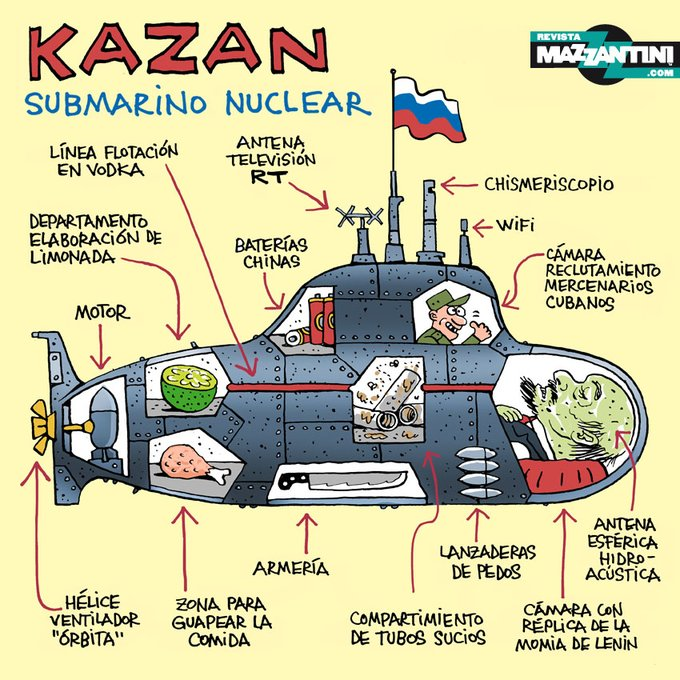
    [image: image.jpeg]
  • Aviación de guerra electrónica-EW.

    Fuerzas aéreas
    437
    0 Votos
    437 Mensajes
    108k Visitas
    D
    Es un clásico; por lo que sé, solo el U2 alcanza mayor altitud, pero no cuenta con los sensores. También habrían colocado sensores espaciales en posiciones preestablecidas, • NASA WB-57: A mid-wing, long-range aircraft converted from the B-57 Canberra bomber, capable of flying above 63,000 feet for scientific and defense testing (such as high-altitude sensor and missile research). • Lockheed U-2 (and NASA ER-2): An iconic high-altitude reconnaissance and Earth-science research aircraft operated by the U.S. Air Force and NASA, capable of operating at altitudes over 70,000 feet Para dar un poco de contexto a nuestra investigación sobre tecnología hipersónica AI Overview UQ achieved the world's first atmospheric scramjet test in 2002 Australia is a global leader in hypersonic research (speeds of Mach 5.0 or greater), driving major advancements in air-breathing scramjet propulsion, ground-testing facilities, and defense partnerships. The University of Queensland +2 Key Hypersonic Programs & Collaborations SCIFiRE (Southern Cross Integrated Flight Research Experiment): A landmark bilateral program between Australia and the United States to develop and test Mach 5-class precision strike hypersonic cruise missiles powered by scramjets. The weapon has been designated as the AHM-4 HACM (Hypersonic Attack Cruise Missile). www.airforce.gov.au +2 Gilmour Space & Hypersonix Partnership: Signed in September 2026, this collaboration pairs Gilmour Space’s rocket propulsion and launch capabilities with Hypersonix's hydrogen-fueled scramjet technology for defense and commercial flight-test programs. Hypersonix Launch Systems Dart AE Demonstrator: Developed by Hypersonix, the Dart AE is a hydrogen-fueled, carbon-neutral, fully 3D-printed hypersonic airframe targeting Mach 7-class testing. YouTube ·DEFENCE CENTRAL +1 HIFiRE Program: A long-running collaboration between Australia's Defence Science and Technology (DST) Group and the US Air Force Research Laboratory focusing on fundamental flight experiments and ground-test validations. Defence Science and Technology Group (DSTG) Leading Research Institutions & Facilities The University of Queensland (UQ): Home to the pioneering Hypersonics Research Group and the Centre for Hypersonics, UQ achieved the world's first atmospheric scramjet test in 2002. It operates advanced shock and expansion tubes (such as X3R). science.qld.gov.au +1 Australian Hypersonic Research Precinct: Located at Eagle Farm in Brisbane, this dedicated hub brings together Defence, industry, and universities (housing over 60 staff) to support national hypersonic test vehicles and SCIFiRE work. Australian Government Transparency Portal +1 University of Southern Queensland (UniSQ): Active via the iLAuNCH Trailblazer program, UniSQ successfully flew its GAsFEx-2 (Germany–Australia Flight Experiment) ride-along payload aboard a DLR MAPHEUS-16 sounding rocket mission. University of Southern Queensland | UniSQ UNSW Canberra: Focuses heavily on fluid-structure interactions, high-temperature aerothermodynamics, and shock-tunnel/wind-tunnel diagnostics. UNSW Sydney +1 Queensland Outback Test Range: A massive 3-million-acre private aerospace and defense testing range near Thargomindah is expanding outback infrastructure for high-speed and hypersonic flight tests.

  • Fragatas F-100

    Fuerzas navales españa 🇪🇸
    295
    0 Votos
    295 Mensajes
    55k Visitas
    PepilloP
    https://www.infodefensa.com/texto-diario/mostrar/6079869/armada-dotara-fragatas-f100-nuevas-camaras-termicas-leda-espanola-tecnobit
  • Aviación comercial

    Fuerzas aéreas
    123
    0 Votos
    123 Mensajes
    26k Visitas
    B
    https://amp.rtve.es/noticias/20261105/alertas-bomba-vuelos-europeos/17300954.shtml
  • Marina de Israel

    Fuerzas navales israel 🇮🇱
    13
    0 Votos
    13 Mensajes
    2k Visitas
    elgranmazapanE
    https://www.youtube.com/watch?v=FDDJJHMIRHM PD:Odio esa musiquita.
  • Marinas de África

    Fuerzas navales
    23
    0 Votos
    23 Mensajes
    3k Visitas
    lepantoL
    Astilleros EDGE botó la corbeta Nimi-ya-Lukeni (F301), la segunda corbeta multimisión BR71 MK II para la Armada de Angola, en su astillero de Abu Dhabi el 29 de octubre. [image: alt text]
  • Geopolitica USA.

    Futuribles usa 🇺🇸
    309
    0 Votos
    309 Mensajes
    62k Visitas
    VorlonV
    Al final negocian, porque en un par de años hay presidenciales y se tienen que colocar en la carrera.
  • US Navy

    Fuerzas navales usa 🇺🇸
    664
    0 Votos
    664 Mensajes
    211k Visitas
    lepantoL
    Era de esperar, tras el tour por oriente hace un año, pero echo en casa de momento, a los de Fincantiere, supongo que para contentarlos después del fracaso constellation, les concedieron cuatro.
  • Marina Italiana

    Fuerzas navales italia 🇮🇹
    333
    0 Votos
    333 Mensajes
    77k Visitas
    GianksG
    https://www.edrmagazine.eu/pdfviewer/edr-magazine-90-november-december-2026?auto_viewer=true#page=&zoom=page-fit&pagemode=none The Italian MoD and Navy are running a programme, via the Organisation for Joint Armament Cooperation (OCCAR), for two “New Generation Destroyers” or “NG DDG” under the DDX programme with a current budget of € 3.7 billion including the development, production, logistic studies and initial In Service Support (ISS). The initial € 2.4 billion contract was signed between OCCAR and prime contractor Orizzonte Sistemi Navali (OSN), the JV between Fincantieri (51%) and Leonardo (49%) in late September 2026 for the first ship to be delivered in 2033, with option for the second one in 2035. The Italian Navy has plans for two additional ships. Designed with the IAMD as the main mission together with deep land strike, the new DDGs will have a full load displacement of 13,500 tonnes, a length and beam of respectively 180 and 25 meters, and a propulsion package based on two gas turbines of around 32 MW-each, two 8 MW-each main diesel engines and two 3 MW-each reversible electric motors, one each on the two shafts, providing a 30 knots maximum speed (on gas turbines). The electric power generation and distribution suite with four diesel generator sets is designed to satisfy the need of future systems such as DEWs. With accommodations for around 250 personnel, the NG DDG will have a next iteration of Fincantieri NexTech SeasNavy Integrated Platform Management System (IPMS) together with a 5th generation (SADOC 5) cyber resilience, open architecture ‘virtualized’ CMS characterized by disruptive technologies (AI) and a full communication suite with data link 16/22 and SATCOM by Leonardo. The sensors suite will include the new air defence S-band fully digital, software- defined AESA long-range and the powerful 4 fixed-faces (4FF) radar being developed by Leonardo; these will be installed on the two ship superstructure blocks alongside the already available air/surface X-band 4FF AESA radar on the main integrated mast together with IFF, which are controlled by a system manager allowing integrated operations with the EW suite by ELT Group. The latter includes RESM/CESM/RECM/CECM equipment with two Leonardo ODLS 20 launchers for both AAW and torpedo decoys that will be sided by the ELT Group Zenithal jammer against space-based synthetic aperture radar satellitepayloads. The ASW suite will include a Thales bow-mounted and Leonardo anti-collision/mine avoidance sonar together with a Thales passive towed array mainly for anti-torpedo duties. WASS will provide the anti-torpedo systems with decoys while SITEP Italia will supply MASS (Multirole Acoustic Stabilized System) surveillance and non-lethal weapons package. The NG DDG will feature a new air defence missile system by MBDA Italia centred on new C2, fire control unit and Naval Group Sylver A50 VLSs, to be sided in the future by a new multi-missile VLS, to be developed under a contract to be awarded to Italian industry. The new DDGs will have a total of 80 cells (32 larger cells in the bow area [objeto de desarrollo por parte de la industria italiana] and 48 smaller amidships) capable to accommodate in the future a wide range of missiles including the air-defence MBDA Aster 30 family with the Block 1NT munition and future Aquila interceptor against ballistic and hypersonic weapons to be developed as a result of OCCAR-managed HYDIS² programme. The new ships will have four 4-cell inclined launchers for the MBDA Italia Teseo Mk2E long-range anti-ship/land attack missile to be sided in the future by the trinational MBDA Stratus LO (Low Observability) new deep strike cruise missile. The gun armament includes three Leonardo 76/62 mm Super Rapido with Strales guided munitions to counter missiles and asymmetric threats associated to four Leonardo NA-30S Mk2 fire control units alongside four 30 mm Lionfish RCWS with air-burst munitions and fire directors, two of which are planned to be replaced in the future by Leonardo/MBDA Italia DEWs, and two WASS 3-tube LWT launchers. Two hangars and stern flight deck for MPH-101/NFH90 helicopters with MBDA Marte ER anti-ship missile and MU90 LWTs are also available

12

Conectado

247

Usuarios

254

Temas

27.9k

Mensajes