
Vehiculos de combate Infanteria/Caballeria.
-
En junio de este año Burkina Faso recibió nuevo equipo de China. Este último envío incluye una serie de vehículos blindados MRAP (Mine-Resistant Ambush Protected), específicamente los modelos todoterreno ligeros blindados Norinco VP11 y CS/VP14, junto con excavadoras Caterpillar.

-
La República Checa recibe las últimas 62 unidades de los vehículos blindados TITUS en tres versiones y dentro del plazo previsto. Las versiones son vehículos de mando y estado mayor (KOVVS), vehículos de comunicaciones (KOVS) y vehículos de coordinación de apoyo de fuego (MKPP).

-
Era lógico que recibiera un motor más potente.1000 CV...aunque mientras los powerpack no se reduzcan de alguna manera, el espacio que ocupan es la mitad del vehículo.
https://www.defensa.com/espana/santa-barbara-sistemas-prepara-blindado-ascod-45-toneladas-mas-1 -
-
Costa de Marfil en la celebración de su Día de la Independencia el 7 de agosto, presentó en un desfile militar las últimas incorporaciones a su arsenal militar. Entre los aspectos más destacados se encontraban vehículos blindados de combate recién adquiridos de China. Los nuevos vehículos son de apoyo de fuego VN-22B de 105 mm y 6x6, el vehículo VP11 (MRAP), el vehículo transportador de mortero autopropulsado CS/SS4 4x4 852 y el vehículo táctico 4x4 Dongfeng Mengshi EQ2050F.
El que sirve al estado, sirve a un ingrato. Seneca.
-
Costa de Marfil en la celebración de su Día de la Independencia el 7 de agosto, presentó en un desfile militar las últimas incorporaciones a su arsenal militar. Entre los aspectos más destacados se encontraban vehículos blindados de combate recién adquiridos de China. Los nuevos vehículos son de apoyo de fuego VN-22B de 105 mm y 6x6, el vehículo VP11 (MRAP), el vehículo transportador de mortero autopropulsado CS/SS4 4x4 852 y el vehículo táctico 4x4 Dongfeng Mengshi EQ2050F.
@lepanto
¿Hay foto? -
Ahí van
VN22b 105 mm

VP11

cs/ss4

donfeng

El que sirve al estado, sirve a un ingrato. Seneca.
 E
1 Respuesta
-
El canal ruso de Telegram War Webm informó que el ejército ruso había capturado su primer vehículo blindado de transporte de personal M1126 Stryker de fabricación estadounidense. Este hecho ocurrió en la región de Kursk, donde el Stryker, que formaba parte de la 82.a Brigada de Asalto Aéreo de las Fuerzas Armadas de Ucrania, fue emboscado. El incidente resultó en la captura del vehículo y la muerte de su tripulación. Posteriormente, el vehículo capturado fue exhibido con la bandera de la 810.a Brigada Independiente de Infantería de Marina de Rusia.
-
También sus primeros BTR-4 capturados, alrededor de Giryi, región de Kursk
-
@lepanto
Volviendo a mirar la foto me surge una duda,¿el cs-ss4 tiene capacidad de tiro directo? -
-
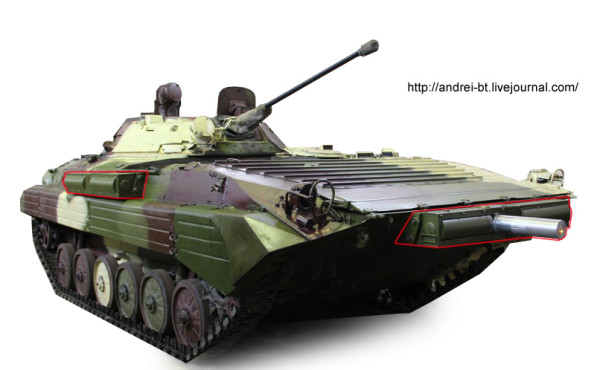
Una modernización interesante para un BMP-2. -
-
@Vorlon
¿Como?
Lo decía en serio,cualquier cosa con APS me parece buena. -
-
-
Ya, y ¿cual es?, ¿que es el tubo que sobresale?...
Alguno lo sabrá, otro que entre y lea sin mas, quizas no sepa de que se habla...
@Vorlon , creo que podría tratarse de alguna evolución del Zaslon ucraniano: https://below-the-turret-ring.blogspot.com/2017/01/hardkill-aps-overview.html
The Ukranian company Microtek has developed the Zaslon active protection system. The APS provides protection against ATGMs, RPGs and HEAT ammunition fired from MBTs. Zaslon consists of a control panel and a number of apparently identical modules, which are spread along the vehicle's surface. Each module contains a radar unit and either one or two countermeasures.

Depending on application Zaslon protects a 150° frontal arc or a 360° arc of the vehicle in azimuth. For protecting a main battle tank such as the T-64 against threats from all-around, seven modules are required: one at the front, two modules on the left and right sides each, one module protecting the rear and a further module mounted at the turret roof to protect against top-attack weapons. Smaller vehicles are often pictured with only four modules: one at the fornt, one at the rear and one each at the left and right sides. A special lightweight version of the Zaslon APS known as Zaslon-L has been offered for the Polish Rosomak infantry fighting vehicle.

The countermeasures are long tubes, filled with high explosives. Essentially the system uses HE-fragmentation grenades, which are designed to spread the fragments only into one direction. The tube is rotated into the direction where the threat would hit, then the countermeasure is detonated when the threat reaches the engagement distance. According to the manufacturer Zaslon can defeat anti-tank guided missiles, rocket-propelled grenades and HEAT ammunition fired from tank guns. While the website mentions a mechanism to weaken KE penetrators, the official specifications from the manufacturer claim that the system can only engage threats with a velocity between 70 and 1,200 metres per second; defeating APFSDS ammunition at normal combat ranges is hence not possible.Due to the design of Zaslon, at most four threats can be engaged per vehicle side - after this the modules have to be reloaded with new HE fragmentation grenades. On smaller vehicles and on the front and rear only two threats can be engaged per side. According to Microtek, the Zaslon system has an "efficiency of operation" between 1 and 6 miliseconds. It is not exactly sure if this is meant to be the system reaction time or only part of the defeat mechanism, not including other factors such as tracking or extruding the countermeasures. Zaslon takes up one litre of internal space, if all modules are mounted externally. The system consumes between 0.4 and 0.5 kW of electrical energy
Un vídeo para ver el funcionamiento del Zaslon-L y hacerse una idea: https://www.youtube.com/watch?v=GSsRgbUqsYI
-
@Vorlon , creo que podría tratarse de alguna evolución del Zaslon ucraniano: https://below-the-turret-ring.blogspot.com/2017/01/hardkill-aps-overview.html
The Ukranian company Microtek has developed the Zaslon active protection system. The APS provides protection against ATGMs, RPGs and HEAT ammunition fired from MBTs. Zaslon consists of a control panel and a number of apparently identical modules, which are spread along the vehicle's surface. Each module contains a radar unit and either one or two countermeasures.
Depending on application Zaslon protects a 150° frontal arc or a 360° arc of the vehicle in azimuth. For protecting a main battle tank such as the T-64 against threats from all-around, seven modules are required: one at the front, two modules on the left and right sides each, one module protecting the rear and a further module mounted at the turret roof to protect against top-attack weapons. Smaller vehicles are often pictured with only four modules: one at the fornt, one at the rear and one each at the left and right sides. A special lightweight version of the Zaslon APS known as Zaslon-L has been offered for the Polish Rosomak infantry fighting vehicle.
The countermeasures are long tubes, filled with high explosives. Essentially the system uses HE-fragmentation grenades, which are designed to spread the fragments only into one direction. The tube is rotated into the direction where the threat would hit, then the countermeasure is detonated when the threat reaches the engagement distance. According to the manufacturer Zaslon can defeat anti-tank guided missiles, rocket-propelled grenades and HEAT ammunition fired from tank guns. While the website mentions a mechanism to weaken KE penetrators, the official specifications from the manufacturer claim that the system can only engage threats with a velocity between 70 and 1,200 metres per second; defeating APFSDS ammunition at normal combat ranges is hence not possible.Due to the design of Zaslon, at most four threats can be engaged per vehicle side - after this the modules have to be reloaded with new HE fragmentation grenades. On smaller vehicles and on the front and rear only two threats can be engaged per side. According to Microtek, the Zaslon system has an "efficiency of operation" between 1 and 6 miliseconds. It is not exactly sure if this is meant to be the system reaction time or only part of the defeat mechanism, not including other factors such as tracking or extruding the countermeasures. Zaslon takes up one litre of internal space, if all modules are mounted externally. The system consumes between 0.4 and 0.5 kW of electrical energy
Un vídeo para ver el funcionamiento del Zaslon-L y hacerse una idea: https://www.youtube.com/watch?v=GSsRgbUqsYI
@champi
Gracias 🫂,es eso lo que se ha instalado. -
-
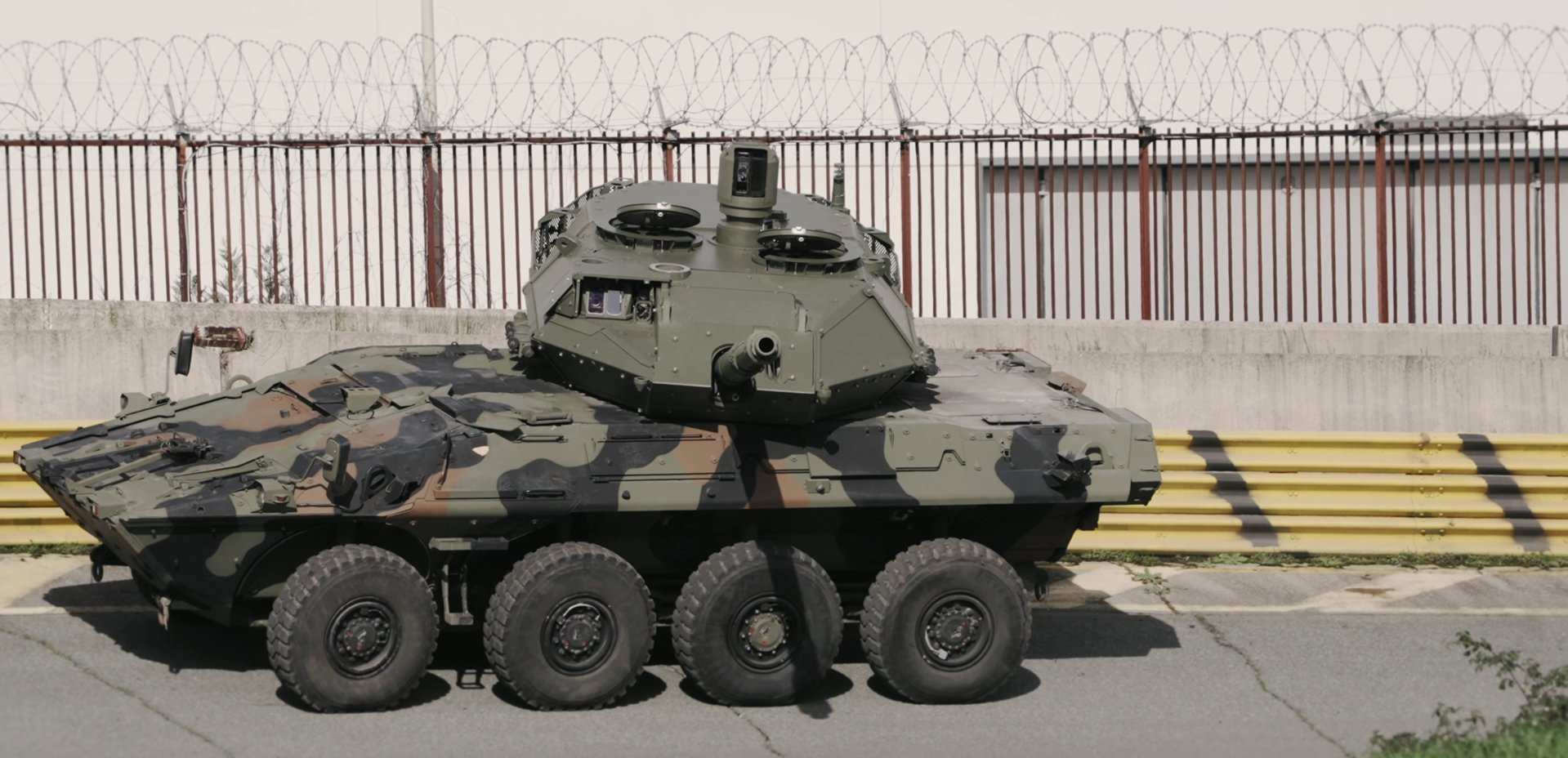
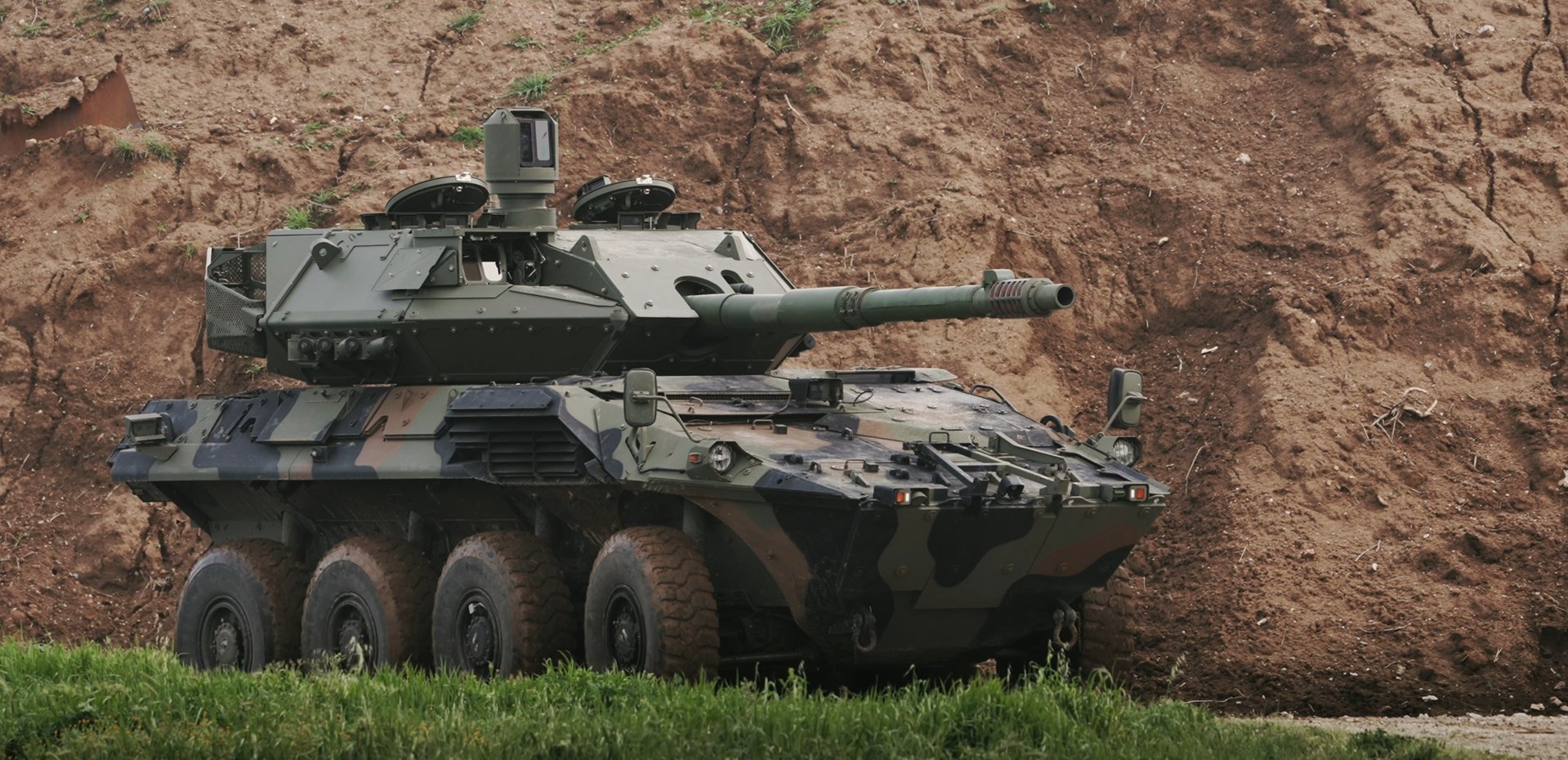
Llegó el primer Centauro a Brasil.
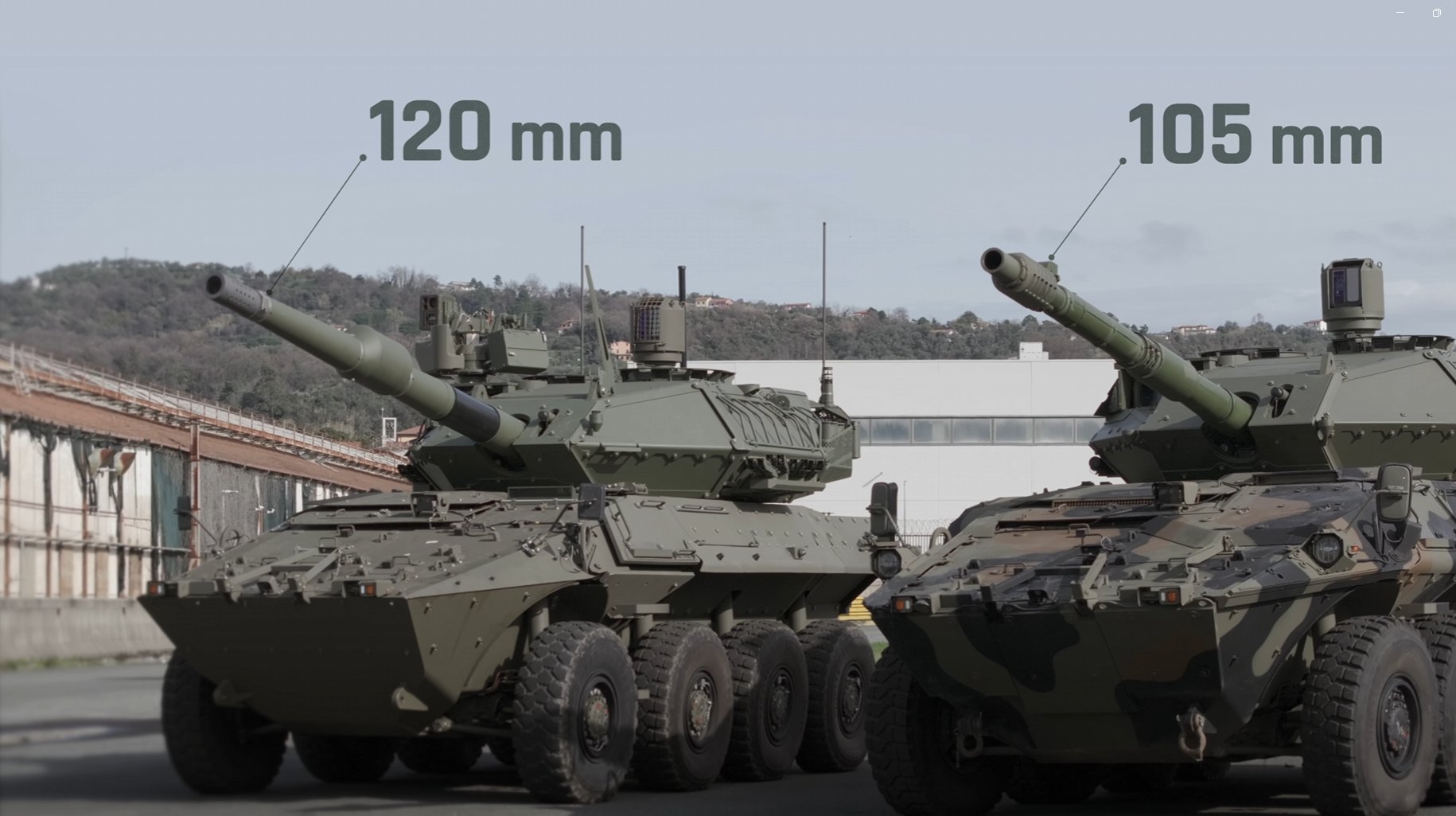
Se presentó recientemente una versión con pieza de 105mm en vez de la 120mm
¡qué lástima para los jinetes hispanos no haber desarrollado esta familia!!!
Ese chasis con una torre como la francesa habría sido un VEC magnifico.






¡Hola! Parece que estás interesado en este tema pero aún no tienes una cuenta.
¿Te cansas de tener que ver las mismas publicaciones en cada visita? Al registrarte, siempre volverás al punto exacto donde estabas y podrás elegir recibir notificaciones de nuevas respuestas (por correo electrónico o notificaciones push). También podrás guardar marcadores y votar positivamente las publicaciones para mostrar tu aprecio a otros miembros de la comunidad.
Con tu ayuda, esta publicación podría ser aún mejor 💗
Registrarse Conectarse